Cutting household expenses is not about willpower — it is about attacking the few shared costs that actually move the number, in the order that pays back fastest. For most households, four categories (housing, utilities, groceries, and subscriptions) swallow the majority of the budget, and a weekend of phone calls plus one system change is usually worth $200–$400 a month. This guide ranks 14 concrete cuts by payoff-per-effort, works the dollar examples, and — the part most articles skip — shows how to make the cuts survive past month one.
Before you cut, it helps to know what you are actually spending on. If you have never itemised it, our list of household expenses is the fastest way to lay every recurring cost on the table so nothing hides.
Where household money actually leaks (the 90-day audit) #
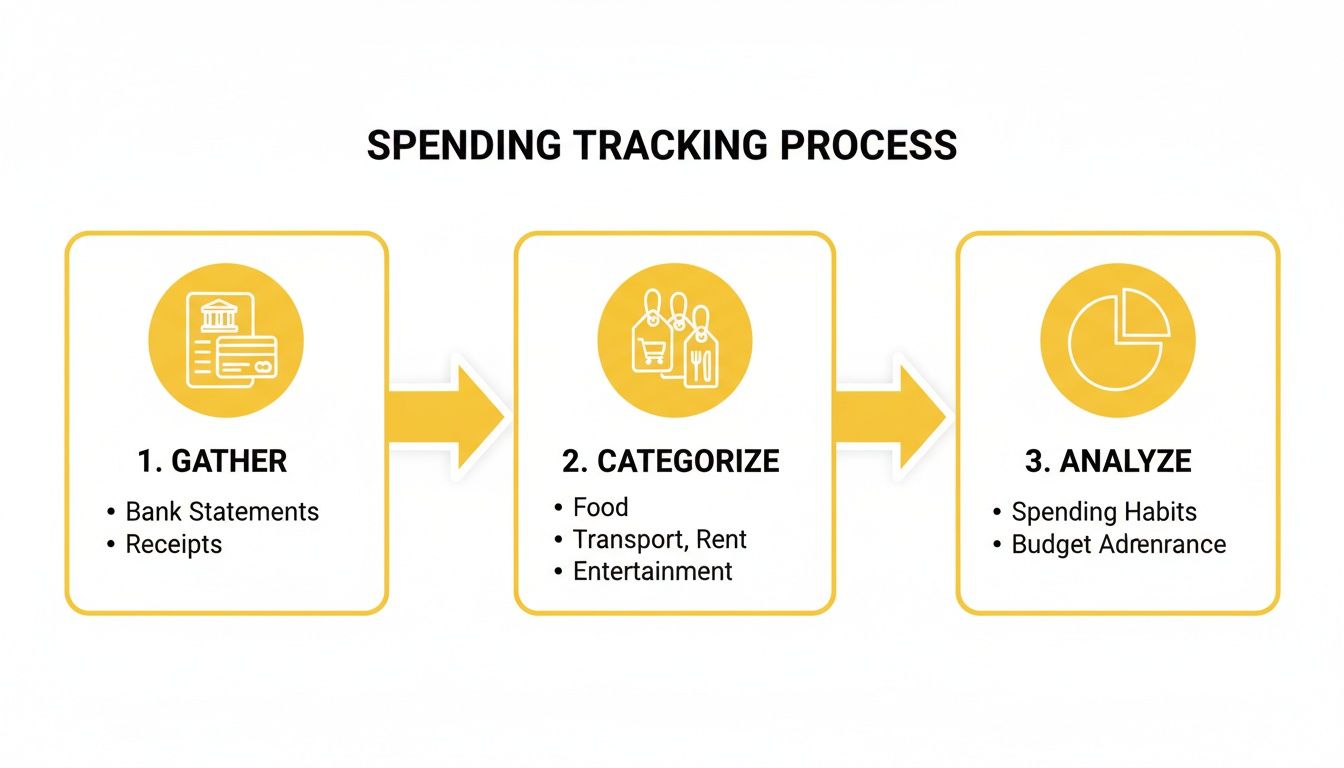
You cannot cut what you cannot see. Pull the last one to two months of statements — checking, savings, every credit card, and digital wallets like PayPal or Venmo — and sort each transaction into plain buckets: housing, utilities, groceries, transport, subscriptions, dining out. A basic spreadsheet works; a dedicated tool like Econumo works faster because you tag as you go.
The goal is not guilt over a coffee. It is a baseline. When a household lays it all out, the surprises are almost always in two places: recurring charges nobody remembers signing up for, and variable spending that drifts up quietly month over month.
Fixed vs variable: which cuts survive #
Split every cost into fixed (rent, insurance, phone plan, subscriptions) and variable (groceries, dining, fuel, impulse buys). The distinction decides which cuts stick. A fixed-cost cut is a one-time act with a permanent payoff — renegotiate the internet bill once and you save every month without thinking about it. A variable cut demands ongoing behaviour, so it needs a system behind it or it quietly reverts. Do the fixed cuts first: they are the cheapest possible savings, paid once in effort.
The 14 cuts, ranked by payoff-per-effort #
Rank cuts by how much they return for how little work, and the order stops being a matter of opinion. Start at the top and work down until you have freed up what you need.
| # | Cut | Effort | Typical monthly saving | Type |
|---|---|---|---|---|
| 1 | Cancel subscriptions you no longer use | Low | $30–$50 | Fixed |
| 2 | Renegotiate phone & internet (loyalty script below) | Low | $20–$60 | Fixed |
| 3 | Move to a cheaper mobile carrier (MVNO) | Low | $20–$40 | Fixed |
| 4 | Kill avoidable bank & card fees | Low | $10–$30 | Fixed |
| 5 | Drop a gym/club you don’t use, or go month-to-month | Low | $20–$60 | Fixed |
| 6 | Shop auto insurance and ask your insurer to match | Low–Med | $25–$75 | Fixed |
| 7 | Lower utilities: thermostat, LEDs, seal drafts | Low–Med | $10–$40 | Variable |
| 8 | Review health insurance at open enrollment | Med | $50–$150 | Fixed |
| 9 | Meal-plan around sales and cut food waste | Med | $60–$200 | Variable |
| 10 | Trim dining out and takeaway | Med | $50–$150 | Variable |
| 11 | Drop insurance riders you don’t need | Med | $15–$50 | Fixed |
| 12 | Add a 24-hour rule for non-essential buys | Low | $20–$80 | Variable |
| 13 | Refinance the mortgage or renegotiate rent | High | $100–$300+ | Fixed |
| 14 | Attack one high-interest debt (frees the payment for good) | High | $150–$300 | Fixed |
Nobody does all fourteen. Six from the top third, done in a weekend, is a realistic $200+ a month.
The big four: housing, utilities, groceries, subscriptions #
Four categories hold most of the money, so most of the savings live there too.
Subscriptions — the silent leak #
The fastest win on the list. Scan two months of statements for recurring charges: streaming you rarely open, an app that auto-renewed, a magazine or gym you forgot. If you’ve lost track of what’s auto-billing you, a subscription-tracking service surfaces the lot in one place. Cancelling two or three is an easy $30–$50 back every month, permanently, for ten minutes of work.
Recurring bills — renegotiate, don’t just pay #
Phone, internet, and TV providers run promotions for new customers and have no reason to pass them to you unless you ask. One call usually does it. Be polite but specific:
“Hi, I’ve been a customer for [X] years and I’m trying to lower my monthly bills. [Competitor] is offering a comparable plan for [price]. Can you get me close to that, or should I look at switching?”
That signals you’re loyal and you’ve done the homework — which is when the “loyalty discount” appears. The same move works on insurance: get three real quotes, match coverage exactly, then ask your current insurer to beat the best one.
| Category | Action | Typical monthly saving |
|---|---|---|
| Housing (rent/mortgage) | Refinance, or renegotiate at renewal | $100–$300+ |
| Auto insurance | Three quotes; ask to match | $25–$75 |
| Health insurance | Right-size the plan at open enrollment | $50–$150 |
| Phone & internet | Loyalty-discount call | $20–$60 |
| Subscriptions | Cancel the unused | $15–$50 |
| Utilities | Thermostat, LEDs, fix leaks | $10–$40 |
Groceries — the fastest variable lever #
Groceries are where a household’s variable spending is most controllable. Build the week’s meals from what’s on sale and what’s already in the pantry before you write a list, and stick to the list once you’re in the store — impulse buys are where the budget quietly leaks. The full playbook is in our guide to saving money on grocery shopping, and if you want a concrete target to aim at, a realistic monthly food budget for two gives you the number to beat.
Free up cash flow by killing high-interest debt #
High-interest debt is the one “expense” that keeps charging you for last year’s spending. Pay a balance off and its monthly payment disappears for good — that is a permanent expense cut, not just a balance reduction. Two proven approaches:
- Avalanche (the math): minimums on everything, every spare dollar at the highest-rate debt. Cheapest overall.
- Snowball (the momentum): attack the smallest balance first for a quick, motivating win.
Neither is “correct” — pick the one you’ll actually stick to, and redirect the $150–$300 you freed above into it. If you want a tool built specifically for this, compare the best debt-payoff apps.

Making cuts stick: track the category, not the resolution #
Most expense cuts fail the same way: a burst of motivation in week one, quiet reversion by week four. The fix is not more willpower — it’s giving each variable category a hard limit that the next month has to respect.
Envelope limits and monthly rollover as the enforcement mechanism #
Assign every variable category a monthly limit and treat it like an envelope: when the grocery envelope is empty, it’s empty. What makes this durable is rollover — money left in an envelope carries into next month, and an overspend is borrowed from somewhere visible rather than silently ignored. That is exactly how Econumo’s budgets work: a limit per category, carried forward month to month, so a cut you made in January is still enforced in April instead of relying on you to remember it.
The other half is manual entry, on purpose. Typing in a purchase forces a half-second of acknowledgement that a silent bank feed never does — that pause is the awareness that changes behaviour. For bulk history you can import a CSV, but the day-to-day habit is the point, not an inconvenience to automate away. (It’s also why this works for freelancers and anyone on a fluctuating income — see budgeting for irregular income.)
If you share the money, share the limits. Build a small, no-questions “fun money” allowance for each partner into the shared budget — it keeps individual freedom intact while everyone stays inside the same plan, which is what stops budgeting from turning into a running argument. And if your household spans currencies — expats, cross-border couples — keep each account in its own currency so the totals reflect reality instead of a guessed exchange rate.
Ease it in over 90 days: month one, just track (your baseline); month two, make the top cuts; month three, set the category limits and let them run. For more on the habit side, see how to stick to a budget.
What NOT to cut (false economies) #
Some “savings” cost more than they save. Skip these:
- Insurance you actually need. Dropping coverage to save $30 is a great deal right up until the claim you can’t file. Right-size the plan; don’t gut it.
- The emergency fund. Pausing savings during a genuine crisis is fine. Cancelling the fund to free up cash just guarantees the next surprise becomes debt.
- All the small joys at once. A budget you hate is a budget you quit. The 24-hour rule beats banning coffee outright — cut the spending you won’t miss, not the things that make the frugal months bearable.
- Health and preventive maintenance. Skipped dental cleanings, deferred car servicing, and cheap-but-failing appliances are deferred bills, usually bigger ones.
- Time for pennies. Driving across town to save $2 on eggs burns fuel and an hour. Rank by payoff-per-effort — that’s what the table above is for.
Common questions #
What if an unexpected bill blows up the plan? #
It doesn’t mean the plan failed — it means it’s flexing, which is the job. Pause extra debt payments or savings for that month, cover the emergency, and pick the plan back up next month. A budget is built to bend.
How fast will we actually see savings? #
Quick wins (cancelled subscriptions, less takeaway) show up inside 30 days — often $50–$150. Renegotiated bills and insurance land within a month or two. The big one, high-interest debt, is a slow burn that changes your cash flow noticeably after about six months of steady extra payments.
How do we get a reluctant partner on board? #
Frame it around a shared goal, not restriction: “what if this paid for the trip next year?” beats “we spend too much.” Build the limits together, keep the personal fun-money allowances, and it reads as a shared mission instead of a straitjacket.