Before you can start cutting costs, you need to figure out where your money is actually going. It sounds obvious, but most of us have only a vague idea. This first step isn’t about making drastic changes; it’s about getting an honest, clear picture of your spending habits. Think of it as creating a map—you can’t plan a new route until you know your starting point.
Your Starting Point: Finding Where Your Money Really Goes #
Feeling the squeeze from rising costs? The best way to get some breathing room in your budget isn’t by making random, painful cuts. It starts with a simple, judgment-free look at your spending. This is all about gathering the facts so you can make smart decisions later.
Gathering Your Financial Data #
First things first, you need to round up your financial statements from the last one to two months. Don’t leave anything out.
- Bank Statements: Pull up the activity for both your checking and savings accounts.
- Credit Card Statements: Grab the statements for every card you use, even the one that just sits in a drawer for emergencies.
- Digital Wallets: Don’t forget to check your transaction history on services like PayPal or Venmo.
Getting all this information in one place turns that vague “I think I spend too much on…” feeling into a concrete list you can actually work with.
Categorizing for Clarity #
With your statements in hand, it’s time to sort every transaction into a category. You don’t need anything fancy—a basic spreadsheet does the trick, or you can use a dedicated tool like Econumo to make it easier. Create simple buckets that make sense for your life, like “Housing,” “Groceries,” “Transport,” “Subscriptions,” and “Dining Out.”
This simple process of gathering, categorizing, and analyzing is the foundation of smart money management.
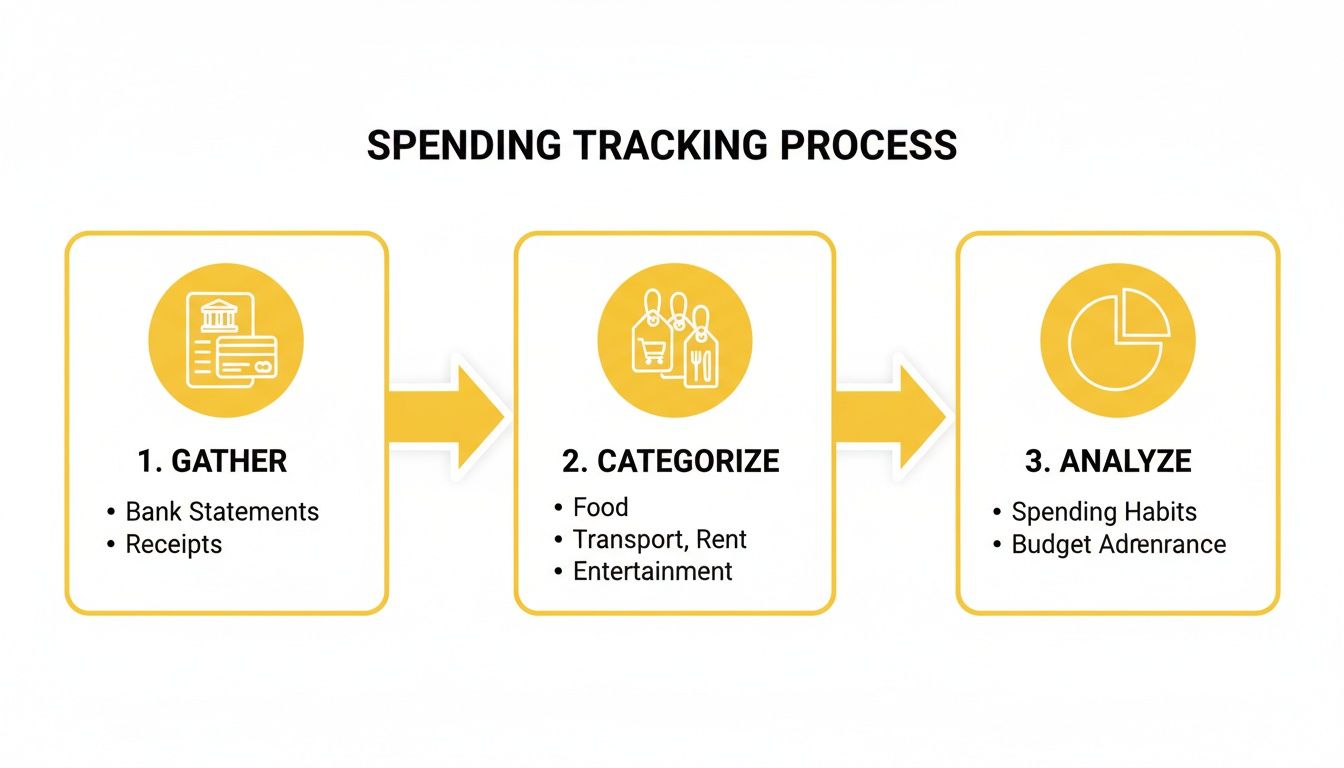
When you see everything laid out, you’ll probably spot some surprising patterns right away. I know I was shocked the first time I realized how much I was spending on random weekday lunches.
As you go, keep a close eye on the “big three”: housing, food, and transportation. For most people, these categories eat up the biggest chunk of their income, which also means they often hide the biggest opportunities for savings. For more tips on this crucial first step, check out these guides on effective expense tracking.
The point of this exercise isn’t to feel guilty about that daily coffee or late-night online shopping. It’s simply to build awareness. You can’t change what you don’t measure.
This initial audit gives you the baseline you need for everything else we’re about to cover. By truly understanding your own financial habits, you’re putting yourself in the driver’s seat to make targeted changes that will actually stick.
How to Lower Your Largest Recurring Bills #
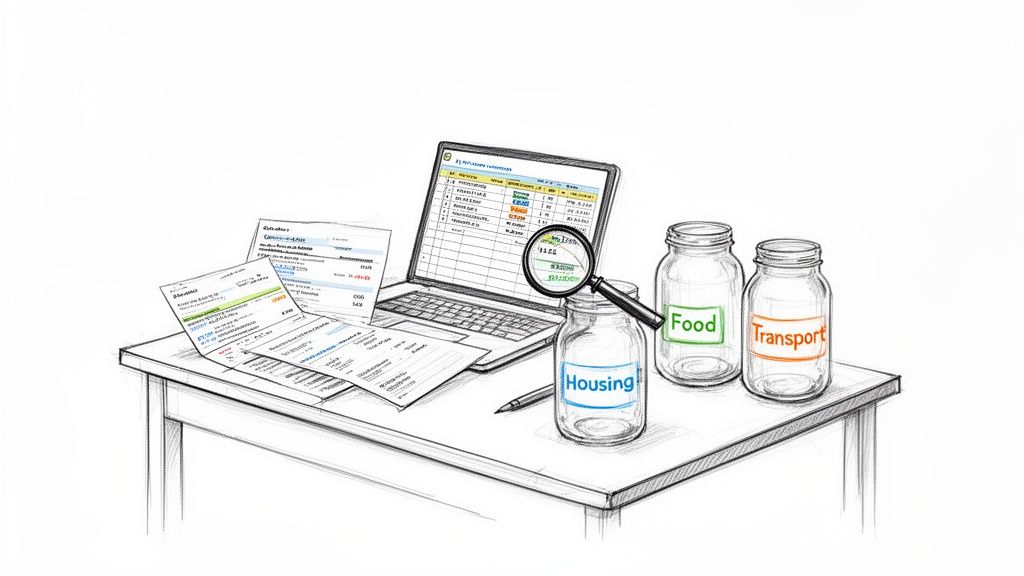
Now that you have a clear map of where your money is going, it’s time to start plugging the leaks. We’re going to tackle the biggest items first—those recurring bills that feel set in stone but often have more wiggle room than you think. A few strategic phone calls and a bit of comparison shopping can free up a surprising amount of cash without requiring a massive lifestyle overhaul.
The fastest way to make a real dent in your monthly spending is to focus on your fixed costs. Things like housing, insurance, and subscriptions often eat up over 60% of a household’s budget. The good news is you’re not alone in looking for savings here. Recent reports show that nearly 75% of consumers are already switching to cheaper alternatives, and you can apply that same mindset to your bills.
Start with a Subscription Sweep #
Before diving into contract negotiations, let’s go for the quick wins. It’s time to hunt down those sneaky, forgotten subscriptions. Grab your last couple of bank statements and scan for any recurring charges you don’t recognize or no longer need.
Look for things like:
- Streaming services you rarely watch
- App subscriptions that auto-renewed without you noticing
- That old gym membership or digital magazine you forgot about
Just canceling two or three of these can easily put $30–$50 back in your pocket each month. Think of it as finding money in your couch cushions, but it happens every single month.
Renegotiate Your Service Bills #
Your phone, internet, and cable providers are almost always running promotions for new customers, but they have zero incentive to offer those better deals to you—unless you ask. A single phone call is often all it takes to lock in a lower rate.
When you call, be polite but firm. Here’s a simple script that works wonders:
“Hi, my name is [Your Name] and I’ve been a customer for [Number] years. I’m calling because I’m looking for ways to lower my monthly expenses, and my current bill is just too high. I’ve seen that [Competitor’s Name] is offering a similar plan for [Competitor’s Price]. Can you help me find a rate closer to that, or should I start looking into switching?”
This little script does two things: it shows them you’re a loyal customer and that you’ve done your homework. More often than not, the representative will suddenly find a “loyalty discount” or a new promotional plan they can move you to.
This table provides a quick-reference guide for the actionable steps you can take to lower your largest monthly bills.
Your Expense Reduction Action Plan #
| Expense Category | Action Step | Potential Monthly Savings |
|---|---|---|
| Housing (Rent/Mortgage) | Shop for a better mortgage rate or consider refinancing. | $100 - $300+ |
| Auto Insurance | Get quotes from at least three competitors and ask your current provider to match. | $25 - $75 |
| Health Insurance | Review your plan during open enrollment to ensure you’re not over-insured. | $50 - $150 |
| Phone & Internet | Call your provider, mention a competitor’s offer, and ask for a loyalty discount. | $20 - $60 |
| Subscriptions | Audit bank statements and cancel any unused services (streaming, apps, etc.). | $15 - $50 |
| Utilities | Install a smart thermostat, switch to LEDs, and fix leaky faucets. | $10 - $40 |
Don’t be afraid to make these calls; a few minutes of discomfort can lead to hundreds of dollars in savings over the year.
Shop Around for Better Insurance Rates #
Homeowners and auto insurance premiums are notorious for creeping up year after year. If you just let your policy auto-renew, you’re likely leaving money on the table.
Here’s a simple three-step process:
- Get Quotes: Set aside an hour to get quotes from at least three other insurance companies.
- Compare Coverage: Make sure you’re comparing apples to apples. The new quotes must offer the same level of coverage as your current policy. Don’t sacrifice essential protection for a slightly lower price.
- Ask for a Match: Armed with your best quote, call your current provider. Let them know you have a better offer and ask if they can match it to keep your business.
For couples or families tackling these tasks together, this is where a shared budget app like Econumo really shines. You can track progress in one place and celebrate the wins together. When one partner successfully slashes the car insurance bill, that shared victory builds momentum, turning a boring chore into a collaborative mission.
Winning the Battle with Everyday Spending #
Now that you’ve trimmed down your recurring bills, the next big opportunity for savings is hiding in plain sight: your everyday, variable spending. This is where small, mindful adjustments in areas like groceries, dining out, and entertainment can add up to huge wins for your budget. The whole game is shifting from reactive spending to intentional buying.
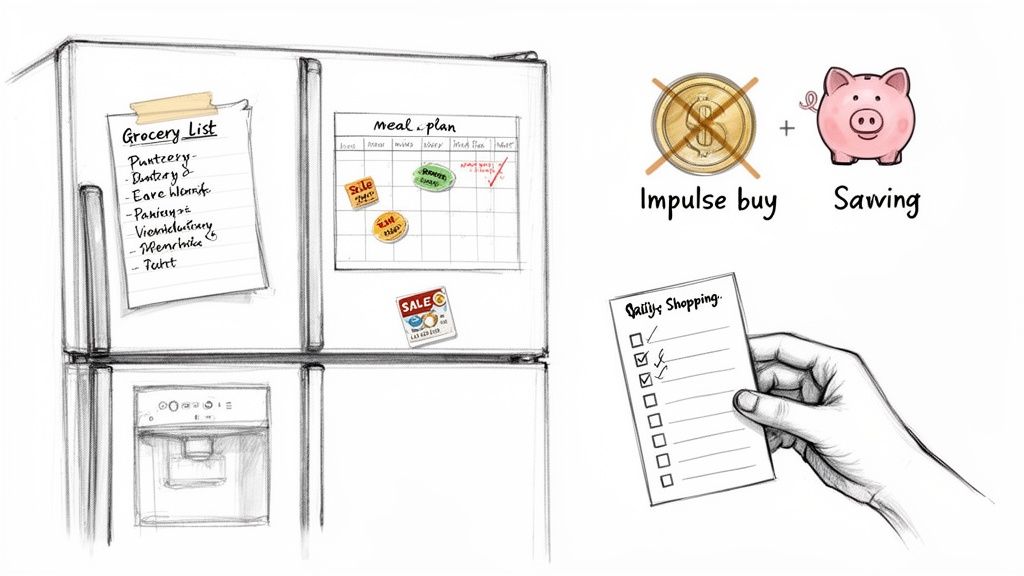
Think about your grocery runs. How often have you gone to the store without a plan and walked out with a cart full of things you didn’t really need? One of the most effective tactics I’ve seen is planning meals around the weekly sales flyers. Before you even write a list, see what’s on special and build your menu from there.
Another game-changer is the “shop your pantry first” rule. Before you even think about leaving the house, take a quick inventory of what you already have. You’d be surprised how many full meals you can pull together from existing ingredients, which drastically cuts down on both food waste and your grocery bill.
Master Your Grocery Runs #
To really curb those impulse buys that wreck your budget, your grocery list needs to become your non-negotiable guide. Stick. To. It. This simple discipline is your best defense against the magnetic pull of the snack aisle derailing your financial goals.
A huge chunk of overspending comes from what I call “budget creep.” Bank statements often reveal dozens of micro-purchases—a coffee here, an app upgrade there, a small online order—that can easily eat up 5–15% of your monthly take-home pay. Using a collaborative tool like Econumo to tag and review these discretionary transactions helps you and your partner set firm caps on non-essentials and actually see your progress. For a broader look, you can find more insights on personal income and spending habits on ey.com.
The Power of the Pause #
One of the best ways to get a handle on your spending is to track it manually. When you have to physically type a purchase into an app like Econumo, it creates a crucial moment of pause. This simple act forces you to acknowledge the transaction, turning an unconscious swipe of a card into a conscious financial decision.
This technique is especially helpful for freelancers or anyone dealing with a fluctuating paycheck, as it provides a crystal-clear picture of cash flow at all times. We cover this in more detail in our guide on budgeting for irregular income.
Budgeting Together Without Losing Your Mind #
Managing money as a couple adds another layer to the challenge, but it absolutely doesn’t have to be a source of conflict. A fantastic strategy is to build individual “fun money” or personal spending allowances directly into your shared budget.
This approach gives each partner the freedom to spend on their own hobbies or wants without guilt or needing to justify every little purchase. It preserves a sense of financial independence while making sure you both stay aligned with your bigger savings goals.
By setting these clear boundaries within a shared financial plan, you can work as a team to cut your monthly expenses while still enjoying your own personal freedom. It’s all about creating a system that works for your relationship, not against it.
Free Up Your Cash Flow by Tackling Debt #
High-interest debt is like a leak in your financial boat. Every month, a chunk of your hard-earned money flows out to interest payments, barely making a dent in what you actually owe. It’s frustrating. But what if you started thinking about debt repayment differently? It’s not just an obligation; it’s one of the most effective ways to permanently lower your monthly expenses.
When you aggressively pay down a loan or credit card, you’re doing more than just chipping away at a balance. You’re buying back your future income. Once a debt is gone, that monthly payment vanishes forever, and that cash is yours again to save, invest, or spend on things that matter.
Find the Payoff Strategy That Works for You #
When it comes to getting out of debt, there are two classic approaches: the “debt avalanche” and the “debt snowball.” There’s no single “best” method—it all comes down to your personality and what keeps you motivated.
The Debt Avalanche (The Math Method): This one’s for the number crunchers. You’ll make minimum payments on everything, but throw every extra dollar you have at the debt with the highest interest rate. It’s the most efficient way to pay, saving you the most money in interest over the long haul.
The Debt Snowball (The Momentum Method): If you thrive on quick wins, this is for you. You’ll attack the debt with the smallest balance first, no matter the interest rate. Knocking out that first small debt gives you a huge psychological boost, creating momentum that makes it easier to keep going.
It doesn’t matter which path you take as long as you stick with it. The real magic happens with consistency. A focused plan turns small, steady actions into massive long-term progress.
Turning Your Plan into Reality #
Now it’s time to put your plan into motion. Remember that money you saved from renegotiating your bills or cutting back on those daily lattes? This is where it goes to work.
Redirecting even $150–$300 a month toward your debt can make a huge difference, saving you thousands in interest and wiping those monthly payments off your budget for good. Research shows that actively managing debt and savings together is a powerful way to reduce your ongoing expenses. You can find more on the latest consumer spending and savings habits from Deloitte.
This is where a tool like Econumo really shines. You can model both the snowball and avalanche scenarios to see a clear projection of your debt-free date and total interest saved. By manually logging each extra payment, you get a real-time visual of your progress. It turns the slow grind of debt repayment into a motivating game you can actually win, getting you closer to having more cash in your pocket every single month.
Keeping Your Financial House in Order for Good #

Saving money for a month is a great start. But keeping your expenses consistently low? That’s what changes your life. The strategies we’ve walked through are perfect for finding those quick wins, but the real magic happens when you turn those actions into habits. It’s all about creating a system that sticks.
This isn’t about being perfect; it’s about building a simple, repeatable routine that doesn’t feel like a second job. If you’re managing money with a partner, getting on the same page is non-negotiable. Using a shared budget in a tool like Econumo puts you both on the same team, heading toward the same goals. It nips so much potential confusion and conflict in the bud.
The Underrated Power of Manual Tracking #
I know, I know—automated tracking is easy. But there’s a powerful psychological benefit to manually entering your transactions. The simple act of typing in what you just spent forces you to pause and acknowledge the purchase. It’s a moment of mindfulness.
This small step creates a feedback loop that automated systems just can’t replicate. You’re not just passively observing your finances; you’re an active participant. Over time, this transforms your mindset from mindless swiping to intentional spending.
Juggling Money Across Borders #
Life gets financially complicated when you’re an expat, a digital nomad, or anyone else dealing with multiple currencies. Exchange rates go up and down, and transfer fees can take a quiet but significant bite out of your budget if you aren’t paying close attention.
This is where multi-currency support becomes a lifesaver. A system that lets you manage all your accounts in one place—regardless of the currency—gives you a clear, unified picture of your financial world. No more guesswork. You can finally see your true net worth and spending habits, helping you make smarter decisions whether you’re paying a bill back home or buying groceries in a new country.
Creating a sustainable system isn’t about perfection; it’s about consistency. A good-enough plan that you follow every week is far more effective than a perfect plan you abandon after a month.
Your 90-Day Plan to Make It Stick #
Trying to change everything overnight is a recipe for burnout. Instead, ease into these new habits over 90 days to give them a real chance to stick.
Days 1-30: The Awareness Phase. For the first month, just track. Don’t judge, don’t change anything yet—just track every single expense. Your goal is to get a crystal-clear picture of where your money is really going. This is your baseline.
Days 31-60: The Action Phase. With a month of data, you know where the low-hanging fruit is. Now it’s time to act. Cancel those unused subscriptions, make a call to renegotiate one or two of your biggest bills, and give meal planning an honest try.
Days 61-90: The Automation Phase. By now, things should start feeling a bit more natural. This is the time to refine your budget categories, set up automatic transfers to your savings account, and take a moment to review how far you’ve come.
This paced approach prevents you from feeling overwhelmed and helps you build real momentum. It breaks a massive goal down into a series of small, manageable wins. If you want to dive deeper, check out our guide on how to stick to a budget.
By the end of these 90 days, you won’t just be saving money—you’ll have built a durable system for managing it for the rest of your life.
Got Questions About Cutting Your Spending? We’ve Got Answers. #
When you first start trying to shrink your monthly expenses, some very real questions always pop up. It’s easy to make a plan on paper, but navigating the real world with its unexpected twists? That’s a different story. Let’s tackle a few common hurdles you might run into.
“What If an Unexpected Expense Blows Up My Budget?” #
Ah, the classic. You’ve just gotten your new budget humming along perfectly, and then—bam—the car needs a new transmission or the dishwasher decides to flood the kitchen. Life has a funny way of testing our plans.
The most important thing to remember is this: an unexpected bill doesn’t mean your plan has failed. It just means it’s time to be flexible. This is exactly why an emergency fund is your best friend.
If you don’t have one built up yet, don’t sweat it. Here’s the game plan:
- Hit Pause, Don’t Panic: Take a deep breath. For this month, put your extra debt payments or big savings goals on hold. Use that cash to handle the emergency, guilt-free.
- Get Back on the Horse: Once the crisis is handled, just pick up where you left off next month.
A single setback isn’t a failure. A good budget is designed to bend, not break, when life throws you a curveball.
“How Fast Will I Actually See Any Savings?” #
Everyone wants to see results right away, and that’s totally understandable. The good news is, you can. The timeline just depends on where you focus your efforts first.
- Quick Wins (This Month): You’ll feel the impact of canceling that streaming service you never watch or cutting back on takeout almost immediately. These small moves can easily free up $50 to $150 in your budget in the first 30 days.
- Bigger Gains (1-3 Months): Calling your cable company to negotiate a better rate or shopping around for car insurance takes a bit more legwork. But the payoff is real, and you’ll see it reflected in your bills within a couple of months.
- The Big Payoff (6+ Months): The most powerful changes, like aggressively paying down high-interest debt, are a slow burn. You won’t wipe out a credit card balance overnight, but after six months of steady extra payments, you’ll start to feel some serious momentum and see your cash flow improve dramatically.
The point isn’t just to find a quick fix. It’s about building new, sustainable habits. Small, consistent efforts are what create massive financial change over the long haul.
“How Can I Get My Partner on Board with This?” #
For couples, money is absolutely a team sport. Getting on the same page is non-negotiable. If your partner seems resistant, it’s usually not because they love wasting money—it’s because they’re worried the new budget will feel like a straitjacket.
The trick is to frame the conversation around shared dreams, not just strict rules.
Instead of saying, “We’ve got to stop spending so much money,” try opening with something like, “What if we could finally save up for that trip to Italy next year?” or “Imagine how amazing it would feel to be totally debt-free.”
Build the budget together. When both of you have a voice in deciding where the money goes—and that includes setting aside a little “fun money” for each of you to spend however you want, no questions asked—it stops feeling like a restriction and starts feeling like a shared mission.
Ready to stop worrying and start building a financial plan that actually works for you and your family? Econumo was built for this. It helps you track shared goals, manage different currencies, and create mindful spending habits as a team. See how it works and find your financial clarity. Learn more at https://econumo.com.